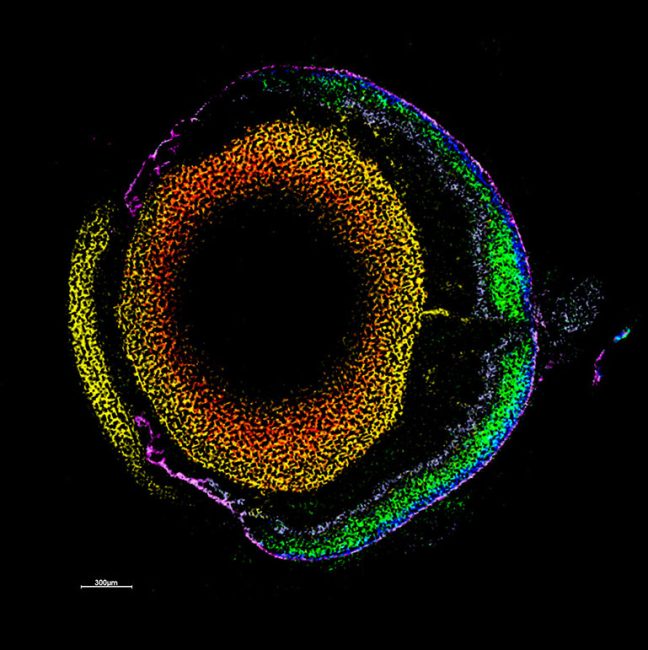
Our aim: To combine innovative imaging techniques and AI to extend imaging scales from cells to tissues and organs to transform clinical practice.
Our aim: To embed data management and science into all of our research groups to best use AI and machine learning to drive life sciences research and create new research tools.
Our aim: To discover new ways of detecting, preventing and combatting human infectious diseases by discovering the mechanisms by which viruses and bacteria interact with human cells and tissues.
Our aim: To develop new technologies to see the molecules of life and their dynamics with unprecedented detail.
Our aim: To use innovative chemistries to better understand and modulate the molecules of life.
Our aim: To drive innovations in mass spectrometry alongside other structural biology techniques to find out more about the role of molecules in biology so that we can better understand health and disease.

The Franklin’s Emerging Interest Areas are developing areas of research led by our talented emerging leaders. These areas align with the Franklin’s mission of accelerating life science discovery and improving human health.
Collaborate with us
Scientists at the Rosalind Franklin Institute have demonstrated a novel way to recover high-resolution structural details of biological objects using transmission electron microscopy – a technique that could reveal new details from thicker, more complex specimens than before. The approach, called electron Fourier ptychography (eFP), reconstructs key properties of the wave of electrons that exit […]